Human Centric Lighting – Circadian Rhythm – HCL - Tuneable
Lights
HCL, also sometimes known as circadian lighting, refers
to a lighting system that benefits human health and well-being. The ideas
behind HCL focus on improving comfort, enhancing mood and boosting productivity
in its users.
Humans have evolved to live in harmony with the Earth’s
daily light cycle. The way the sunlight changes from morning to night signals
your body to behave a certain way. For example, sunlight makes you alert in the
morning, while darkness at night makes you sleepy.
Despite the health benefits of getting sufficient
sunlight, most individuals are not able to spend their days outside. On
average, people spend 90% of their
time indoors. Before widespread industrialization, people worked with,
rather than against, the natural light cycle. Today, most people are exposed
mainly to artificial light, which is static. In many cases, artificial lighting
is too dim during the day and too strong at night, which disrupts the
circadian rhythm and increases the risk of disease. Humans need
the right light color and intensity at the correct time of day to live life
optimally.
Since most people cannot move their workspaces or
bedrooms onto the lawn, they need a different way to get health-promoting
light. The solution is called human centric lighting (HCL). With HCL, indoor
lighting no longer revolves around unchanging fixtures. Instead, it mimics the
natural world’s light cycle and supports your circadian rhythm. As a result,
HCL encourages productivity during the day and relaxation at night, potentially
leading to an improved overall quality of life.
Scientists have much more to learn about HCL and its
health benefits. In the meantime, it’s worth exploring HCL and its impact on
employees, students, patients and residents. In this guide, we’ll examine HCL,
what it means, how it can help individuals get better sleep and feel more
motivated and where this lighting solution can be applied. We will also explore
how the Internet of Things (IoT) and smart controls play an important role in
bringing HCL into homes, schools and commercial buildings.
What Is Correlated Color Temperature?
CCT describes how yellow or blue a white LED appears.
Color temperature measurements can be traced back to 1848, when William Kelvin
noted color changes as he heated a block of carbon. He first noticed a red hue
that changed to yellow, which eventually reached bluish-white at its highest
heat. These observations formed the basis for the Kelvin color temperature
scale. CCT is expressed in Kelvin (K) temperature units.
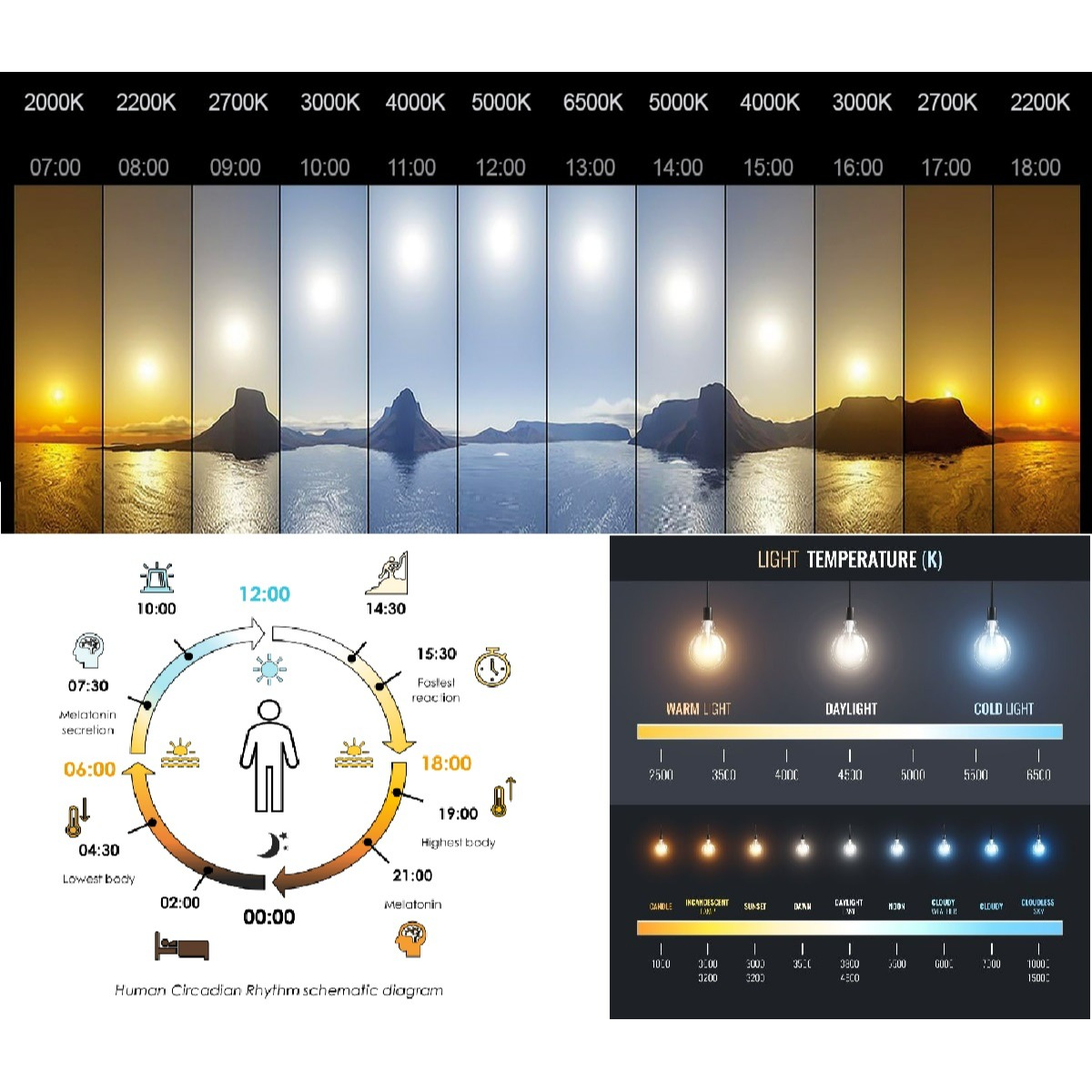
For example, blue-whites are in the 7,000 K range, while
yellows and oranges fall in the 2,000 K to 3,000 K range. A setting sun, for
instance, might be assigned 2,300 K, while a cloudy sky may be 7,500 K. In the
natural world, light has the lowest CCT in the early morning hours and the
highest in the afternoon. Tunable LEDs can be adjusted to various shades of
white to replicate the CCTs found in nature as they change throughout the day.
These changing color “temperatures” impact your circadian rhythm.
What Is a Circadian Rhythm?
Circadian rhythms are the mental, behavioral and physical
changes that follow a regular pattern. These changes mainly respond to the
surrounding environment’s lightness or darkness. Sleeping at night when it’s
dark and being awake during the day is an example of a circadian rhythm. Most
living creatures, including plants, experience circadian rhythms, and this
pattern repeats approximately every 24 hours. Natural light is the strongest
cue needed to reset the 24-hour sleep-wake cycle.
Sleeping circadian rhythm cycles
A circadian rhythm is not the same as a biological clock,
but the two terms are related. Your biological clock is your innate timer,
which creates your circadian rhythm. It consists of molecules that exist
throughout your body and interact with your cells.
A master clock in your brain controls the biological
clock in your body. The master clock consists of thousands of nerve cells that
form a structure located in your hypothalamus. This structure receives input
directly through your eyes. When the surrounding light goes down, the master
clock tells your body to produce more melatonin, so you get sleepy. Therefore,
exposure to bright light before bed can suppress the release of melatonin and
keep you awake.
Improper exposure to light can disrupt the circadian
rhythm and lead to an increased risk of developing sleep disorders, depression,
poor eating habits and various diseases. However, if you use light to create a
stable circadian rhythm, you may see an improvement in your mental and physical
health.
What Are the Health Benefits of Human Centric
Lighting?
Based on what we know about sunlight and how it
influences our circadian rhythms and well-being, one can argue HCL restores our
natural sleep-wake cycles. As a result, HCL could help individuals feel more
energized during the day and more relaxed at night. However, scientists still
need to determine factors, such as the required light intensity, color and
exposure length necessary to benefit from HCL as one would from daylight.
Researchers must also figure out how HCL affects people
differently depending on age, sex and other factors. In the meantime, consider
the following studies and how they demonstrate the benefits of proper lighting:
1. Increases Productivity
If you’re wondering how to increase productivity — either
in your business or home — it’s worth investigating HCL as a substitute for
sunlight. Numerous studies show natural light increases productivity,
satisfaction and well-being in employees. By incorporating HCL into your
workspace, you can create an energizing and inspiring atmosphere, which can
help your business thrive. The following studies support the potential of HCL
to improve productivity levels:
·
Daylight exposure boosts mental health and
improves sleep in office workers: A study published in the Journal of
Clinical Sleep Medicine compared the effects of working in a windowless
environment with one that received much more daylight. Those who worked in a
windowless room scored lower on a self-reported health survey in vitality and
mental health, and they also slept less. Individuals who worked with daylight
exposure slept an average of 46 minutes more per night than those who did not
work near windows.
·
Daylight with a view improves workers’
cognitive performance: According to a Building and Environment article,
access to sunlight and a view of the outdoors in an office improves
performance, working memory and satisfaction in employees. It also reduces
eyestrain. In this study, researchers used shading systems to minimize glare
while allowing the sunlight to come in. The article supports the idea of
utilizing carefully planned lighting, such as HCL, to improve employee comfort
— and thus performance.
·
Poor lighting negatively impacts office
workers: A study published in 2019 investigated the effects of poor
illumination on office workers in Tanzania. The study’s participants
significantly reported eyestrain, headaches and back and neck pain due to
low-quality lighting, all of which could impact productivity. As a study from
2015 states, pain significantly affects productivity at work. It also makes
employees less satisfied with their work environment.
·
Daylight increases alertness: A study
from 2012 compared the effects of artificial light to sunlight in 29 subjects.
According to its findings, subjects who were exposed to daylight in the
afternoon were remarkably more alert in the early evening and performed more
accurately than they did with artificial light exposure. Although HCL uses
artificial light sources, it resembles natural light and may produce similar
effects.
·
Cool lighting is beneficial for completing
computer-related tasks: According to a study published in 2018, cool color
temperatures led to significant increases in alertness when compared to warm
light temperatures, regarding typing and editing tasks. Study participants also
exhibited faster typing speeds and greater accuracy under cool light
temperatures. Researchers believe 6,500 K is the best color temperature for
office work.
As the Lighting Research Center (LRC) states, light
exposure strongly influences alertness. Dark, sleep-inducing conditions should
not be replicated in the workplace with inadequate lighting. Instead, building
managers should try to reproduce the bright blue sky as much as possible,
either by using HCL, natural light or a combination of both.
Researchers at the LRC also conducted a study to
demonstrate HCL’s efficacy in offices. As they predicted, the
circadian-effective lighting led to reduced sleepiness throughout the workday,
and participants reported feeling more alert and energetic during the study.
2. Improves Sleep
When your body follows the sun’s natural pattern, your
sleep improves. This phenomenon allows your body to produce melatonin at the
right time of day. Alternatively, if you stay up too late looking at your
phone, for example, the blue light emitted from your device will simulate
daylight and suppresses melatonin production, making it more challenging to get
the sleep you need. Over time, lack of sleep can lead to serious health issues,
including heart disease and cancer.
Under dark conditions, your brain produces the hormone
melatonin, which signals your body to sleep. This process occurs a few hours
before your body’s natural bedtime. Exposure to too much light delays melatonin
production and sleep, which leads to poor performance during the day and the
risk of developing health issues. However, it’s important to note that not all
light impacts sleep. For example, warm-colored night lights will not suppress
melatonin. However, a bright blue light will.
The following studies demonstrate how exposure to light
can impact sleep, for better or worse:
·
Daytime light exposure increases sleep
quality: A study published in Sleep Health examined the impact of
circadian-effective light on office workers’ moods and sleep quality. The study
found workers who received high levels of light in the morning fell asleep
faster and enjoyed better sleep at night than participants exposed to low
morning light levels. High doses of circadian-effective light during the day
are also associated with reduced depression. Morning light resets your
circadian rhythm, so you can wake up easily at the start of your day and be ready
to fall asleep at night.
·
Evening light suppresses melatonin production
in children: A study from 2018 investigated the effects of bright light
exposure on preschoolers in the evening. By looking at the study participants’
saliva samples, researchers found melatonin production was suppressed in
response to a bright light stimulus and remained at low levels for nearly an
hour after they removed the light source. Parents might consider HCL to help
their children get the sleep they need and promote healthy development.
·
Blue light is an alerting stimulus: In a
study conducted by the LRC, participants were exposed to various blue light
levels in 50-minute durations at night. After light exposure, researchers
measured alertness. They found a strong correlation between blue light exposure
and melatonin suppression. According to the study’s findings, the circadian
system plays a vital role in nocturnal alertness.
·
Light controls when we sleep: Another LRC
study asked subjects to set their alarm clocks 90 minutes earlier than their
regular wake-up time. Half of them were exposed to bright light in the morning
and dim light at night. The other half received the opposite — dim light in the
morning and bright light at night. What the researchers found wasn’t too
surprising. The first group was more awake in the morning and more tired at
night than the second group, further demonstrating how light impacts sleep.
The evidence is pretty clear — exposure to bright light
at night makes it more difficult to fall asleep. Lighting should be less
intense and warmer at night to promote relaxation, resembling the setting sun.
One of purposes of HCL is to help individuals wind down before bedtime and
gradually transition into a state of sleepiness. Homeowners with HCL can also
mimic the rising sun in the morning to help them wake up more easily.
3. Boosts Mood
If HCL can help you sleep better and be more productive
at work, chances are, you’ll feel happier, too. HCL may also directly boost
someone’s mood, particularly if they suffer from seasonal affective disorder
(SAD). Roughly half a million Americans experience SAD during the winter,
though the condition can occur in the summer, as well. Although women are more
likely to experience SAD than men, anyone can have this condition, including
children.
Although the exact causes of SAD are unknown, it’s
believed to be affected by a lack of sunlight that occurs during the winter,
which shifts the circadian cycle. SAD may also be influenced by daytime
melatonin production due to a lack of daylight, which can lead to sleepiness in
the afternoon. Lastly, when some individuals miss out on sunlight, they might
experience decreased serotonin levels in the brain, leading to SAD and
depression.
People with SAD experience symptoms such as a greater
need for sleep, anxiety, sadness, irritability and a lack of energy. Many of
these side effects overlap with standard forms of depression — including loss
of interest in daily activities and changes in appetite. Though it typically
responds well to common treatments for depression, like antidepressants and
therapy, doctors can remedy it with other methods. One way to treat SAD is with
light therapy.
Light therapy has existed since the early 20th century to
treat various conditions, from sleep disorders to infections. Today,
individuals use light boxes to replace sunlight and ease SAD symptoms. Light
boxes create a bright white light that tricks the brain into thinking it’s
being exposed to sunlight. Doctors recommend getting this dose of “sunlight” in
the morning, or before 10 a.m., and for at least 30 minutes a day.
Considering what we know about sunlight, SAD and light
therapy, it may be safe to assume HCL can be part of a mood-boosting
environment. Whether used at home, in the office or both, HCL may help
individuals feel happier and more energetic all year long.
The Benefits of Human Centric Lighting and IoT
Automation
Imagine working in a windowless office all day. When you
start work, the lights in your cubicle are bright as a cloudless sky. As the
day progresses, the lights gradually, and automatically, get dimmer and change
from an energizing bluish-white to a warm, amber glow. On your ride home, you
notice how the lighting in your personal workspace matches the world outside,
and you feel yourself becoming more relaxed and ready to enjoy some downtime.
Even though your co-workers prefer working in brightly
lit cubicles all day, you find your setup works better for you. All of this,
plus the customization, is possible with HCL and IoT.
IoT allows you to control the lighting system in your
entire home, office or individual space by using an app on your phone or
another device. Your IoT device communicates with the connected LED fixtures
and tells them to change color and intensity to match your desired effect.
For example, if you’re just waking up and want to feel
alert as you make coffee, you can control LEDs with your phone and tune them
precisely to the color temperature and intensity you want, which, in this
example, might be a bright stimulating white. Before bedtime, you can adjust
your bedroom’s lighting to look like candlelight or gradually fade like the
setting sun.
If you wish, you can set the lighting to change
automatically, according to a certain schedule. For example, maybe you want the
lights in your kitchen to be brilliant and inspiring at noon when you’re ready
to make lunch. Or perhaps you want your home to resemble a movie theater when
you arrive at 6 p.m. every day. A smart home will sense when you walk through
the door and automatically turn your living room into a dimly lit cinematic
palace.
Another possible option is to synchronize the lighting
system with nature, so the inside light always matches the outside environment
— you don’t even have to think twice about it. If you need to change the
lighting momentarily, you could still do so manually with IoT. You can find
settings that work for your needs and lifestyle.
LED fixtures are perfect for HCL and IoT because they are
precise and easily adjusted. LEDs are also favored for longevity, efficiency
and flexibility, making them easy to incorporate into an HCL system at work or
home. LEDs can be controlled by IoT devices with outdoor fixtures, as well.
Overall, when you combine the ideas of HCL with smart
technology, you face endless options regarding customization and lighting
solutions that fit your needs. You can truly create a home or workspace that
uses lighting to support your circadian rhythm and daily activities, and it can
all be automatic. Anyone who is concerned with improving their well-being
should consider the potential of HCL and IoT.
Where to Use Human Centric Lighting
Similar to sunlight, HCL can make any environment more
comfortable and suitable for the tasks at hand. For example, schools, health
care facilities, employers and homeowners are currently experimenting with HCL
and how it impacts productivity, comfort levels and health. Let’s explore the
various settings and how the people in these environments might benefit from
HCL. As you’ll see, in many cases, HCL simply makes sense.
1. Health Care Facilities
2. Schools
3. Commercial Buildings
4. Homes
5. Manufacturing Plant
6. Corporate Offices
7. Yoga & Meditation Centers