KNX is a standardized communication protocol for
smart homes and building automation. It is an open standard that allows devices
from different manufacturers to work together seamlessly in a building
automation system. KNX is widely used for controlling and monitoring various
functions in residential, commercial, and industrial buildings, such as
lighting, heating, ventilation, air conditioning (HVAC), security, and energy
management.
Key Features of KNX:
- Open
Standard: KNX is an international standard (ISO/IEC 14543-3) and is
supported by hundreds of manufacturers worldwide.
- Interoperability:
Devices from different manufacturers can work together as long as they are
KNX-certified.
- Wired
and Wireless Communication: KNX supports multiple communication media,
including:
- Twisted
Pair (KNX TP): The most common wired communication method.
- Powerline
(KNX PL): Uses existing electrical wiring for communication.
- Radio
Frequency (KNX RF): Wireless communication for easier installation.
- IP/Ethernet
(KNXnet/IP): Integrates KNX with IP networks for remote control and
monitoring.
- Decentralized
System: KNX devices operate independently, meaning the system remains
functional even if one device fails.
- Scalability:
KNX systems can be scaled from small homes to large commercial buildings.
- Energy
Efficiency: KNX enables intelligent energy management, reducing energy
consumption and costs.
How KNX Works:
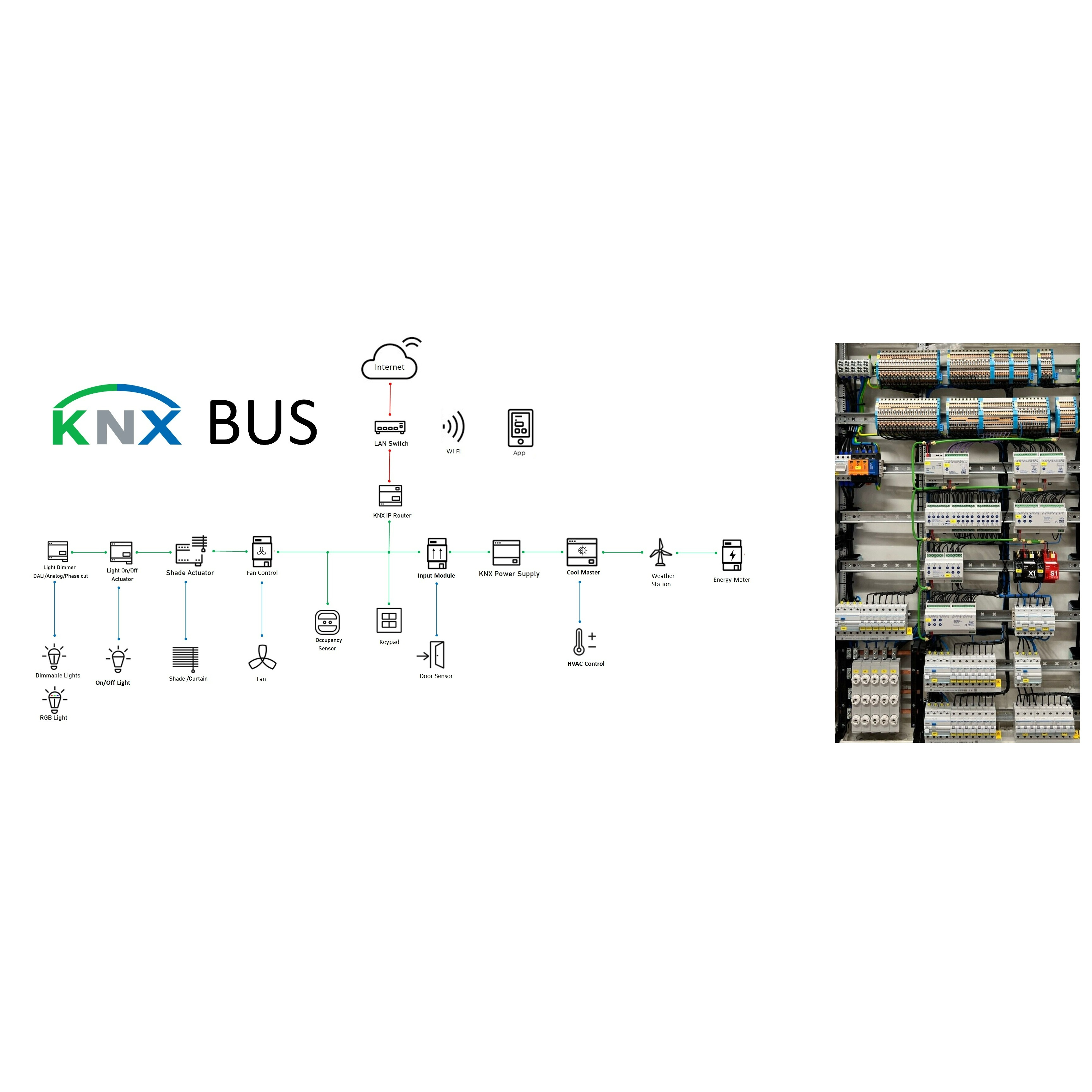
- KNX
Devices: These include sensors (e.g., motion detectors, temperature
sensors) and actuators (e.g., light switches, relays) that communicate
with each other.
- KNX
Bus: A common communication line (e.g., twisted pair cable) connects
all KNX devices, allowing them to exchange data.
- KNX
Software: Tools like ETS (Engineering Tool Software) are
used to configure and program KNX devices. ETS allows users to set up the
logic and behavior of the system.
Applications of KNX:
- Lighting
Control:
- Automate
lighting based on occupancy, time of day, or ambient light levels.
- Create
scenes (e.g., "Movie Mode") to adjust multiple lights at once.
- HVAC
Control:
- Regulate
heating, cooling, and ventilation based on room occupancy or temperature.
- Integrate
with weather forecasts for energy-efficient operation.
- Security
and Access Control:
- Monitor
doors, windows, and motion sensors.
- Control
access to buildings or rooms using keypads or biometric systems.
- Energy
Management:
- Monitor
and optimize energy usage.
- Integrate
with renewable energy sources like solar panels.
- Blinds
and Shutter Control:
- Automate
blinds based on sunlight, time, or user preferences.
- Audio/Video
Control:
- Integrate
with multimedia systems for centralized control.
Advantages of KNX:
- Flexibility:
KNX systems can be customized to meet specific needs and expanded over
time.
- Reliability:
The decentralized architecture ensures high reliability.
- Energy
Savings: Intelligent automation reduces energy consumption.
- Future-Proof:
KNX is a mature and evolving standard, ensuring long-term compatibility.
Disadvantages of KNX:
- Cost:
KNX systems can be expensive due to the high-quality components and
professional installation required.
- Complexity:
Designing and programming a KNX system requires specialized knowledge and
tools like ETS.
- Installation:
Wired KNX systems (e.g., KNX TP) require cabling, which can be challenging
in existing buildings.
Conclusion:
KNX is a powerful and versatile system for building
automation, offering high reliability, interoperability, and energy efficiency.
While it is more commonly used in professional installations, it is also
suitable for high-end residential projects where customization and long-term
reliability are priorities. If you’re planning a smart home or building
automation system, KNX is a robust choice, especially for larger or more
complex setups.